

Description
Choose the Roller for the Contact You Need
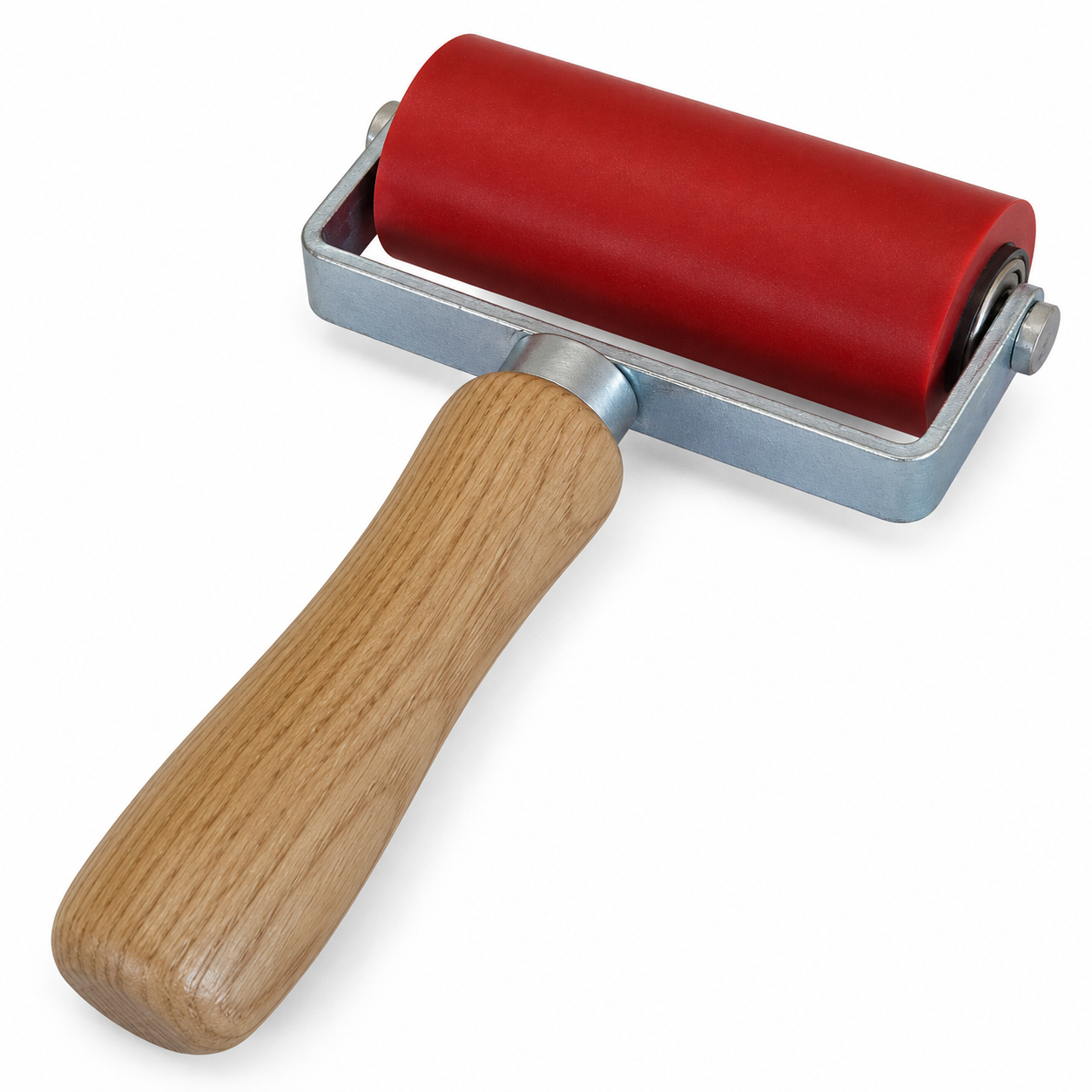
Use a handheld pressure roller for localized contact at accessible flooring edges, near-seam areas and details where the installation method permits it. Choose the wheel material, contact width and head arrangement around the actual surface and working space.
Other configurations are listed in the selector above.
Single-wheel, double-ended, seam-probe and side-by-side designs serve different tasks. Red and green identify color options; color alone does not establish a different hardness or temperature grade.
Compare Head Arrangements
| Arrangement | Practical use | What to check |
|---|---|---|
| Single wheel | One localized contact band; select width around the accessible surface. | Allow space for the bracket and handle, as well as the wheel. |
| Double-ended | Flip the tool to use either contact end. | It is an alternating-end tool, rather than two wheels rolling together. |
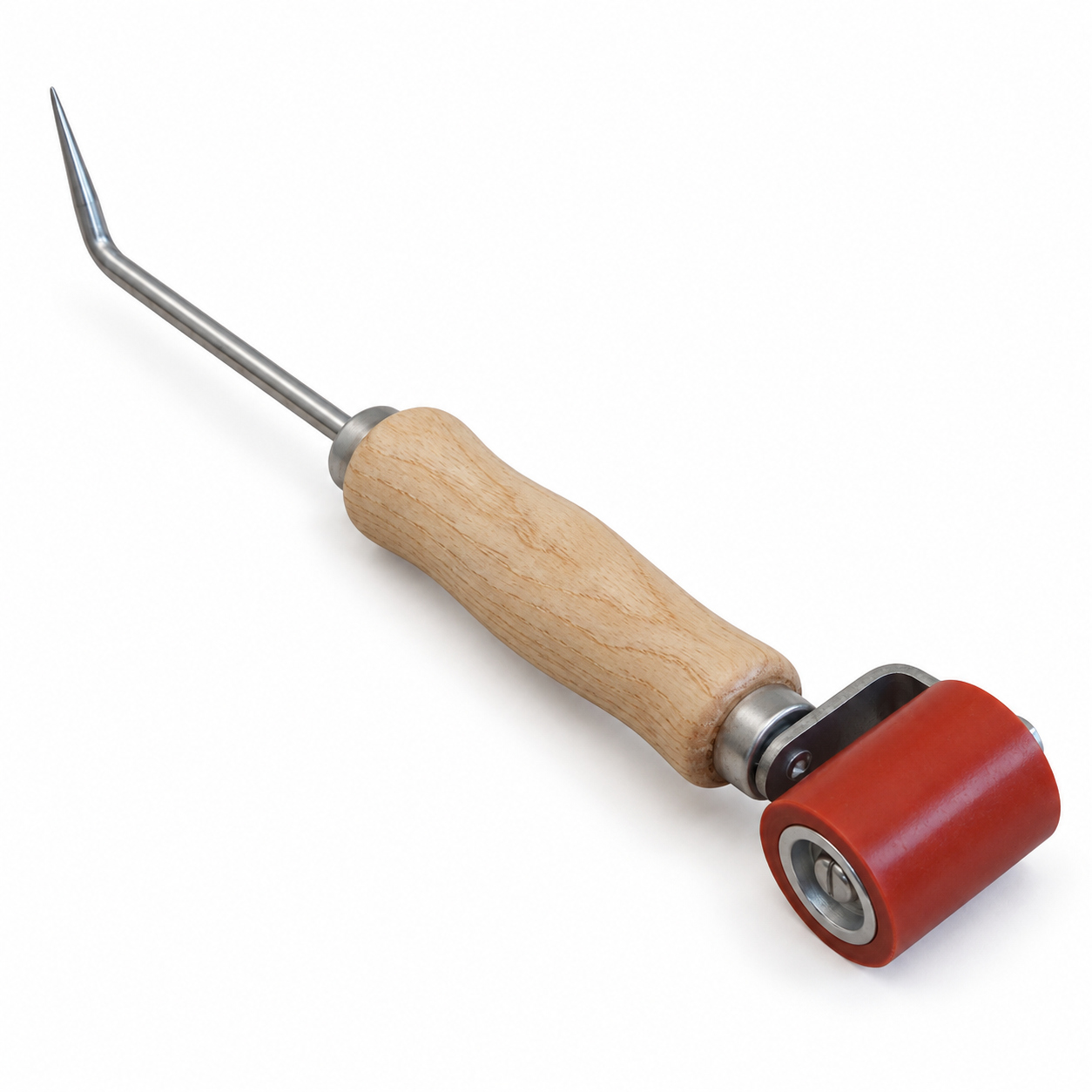
| Roller with seam probe | Keep a rolling end and an inspection probe on one handle. | Protect the probe end and use the inspection method specified for the material system. |
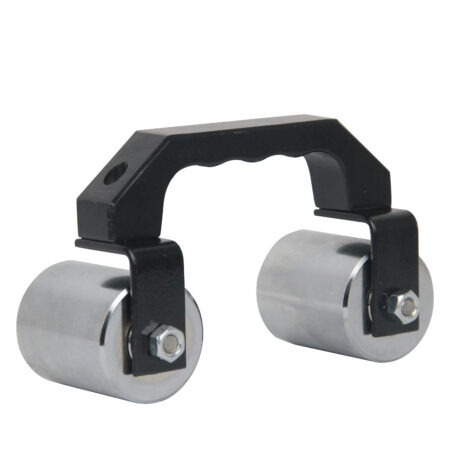
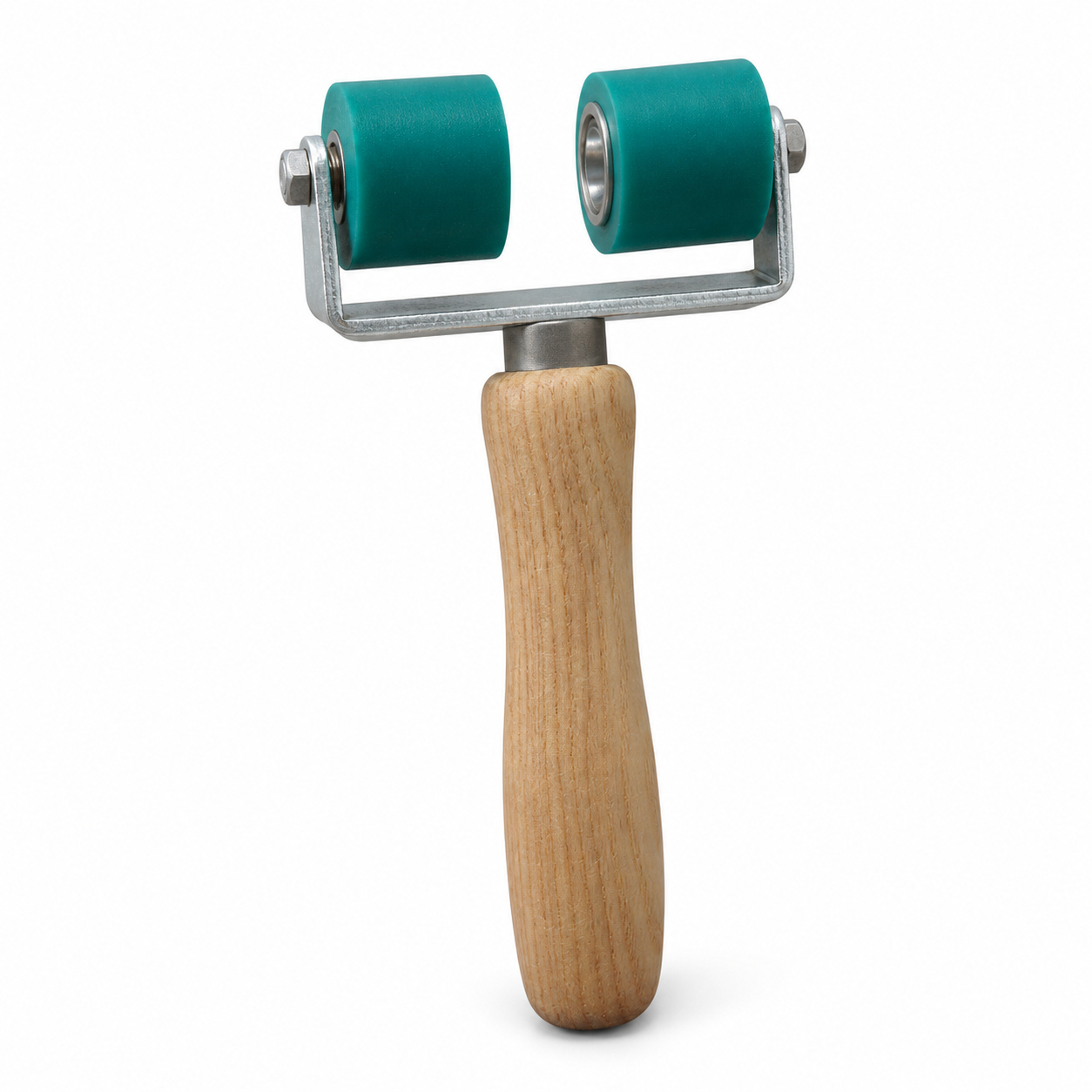
| Side-by-side twin wheel | Guide two contact bands with one grip. | Check the gap between wheels. 28 + 28mm does not form a continuous 56mm face. |
Single wheel
Practical use:
One localized contact band; select width around the accessible surface.
What to check:
Allow space for the bracket and handle, as well as the wheel.
Double-ended
Practical use:
Flip the tool to use either contact end.
What to check:
It is an alternating-end tool, rather than two wheels rolling together.
Roller with seam probe
Practical use:
Keep a rolling end and an inspection probe on one handle.
What to check:
Protect the probe end and use the inspection method specified for the material system.
Side-by-side twin wheel
Practical use:
Guide two contact bands with one grip.
What to check:
Check the gap between wheels. 28 + 28mm does not form a continuous 56mm face.
Choose the Contact Material
| Contact surface | Why consider it | Selection check |
|---|---|---|
| Silicone | Width options for localized flat-surface and detail contact. | Confirm compatibility with the material, working conditions and surface-finish requirements. |
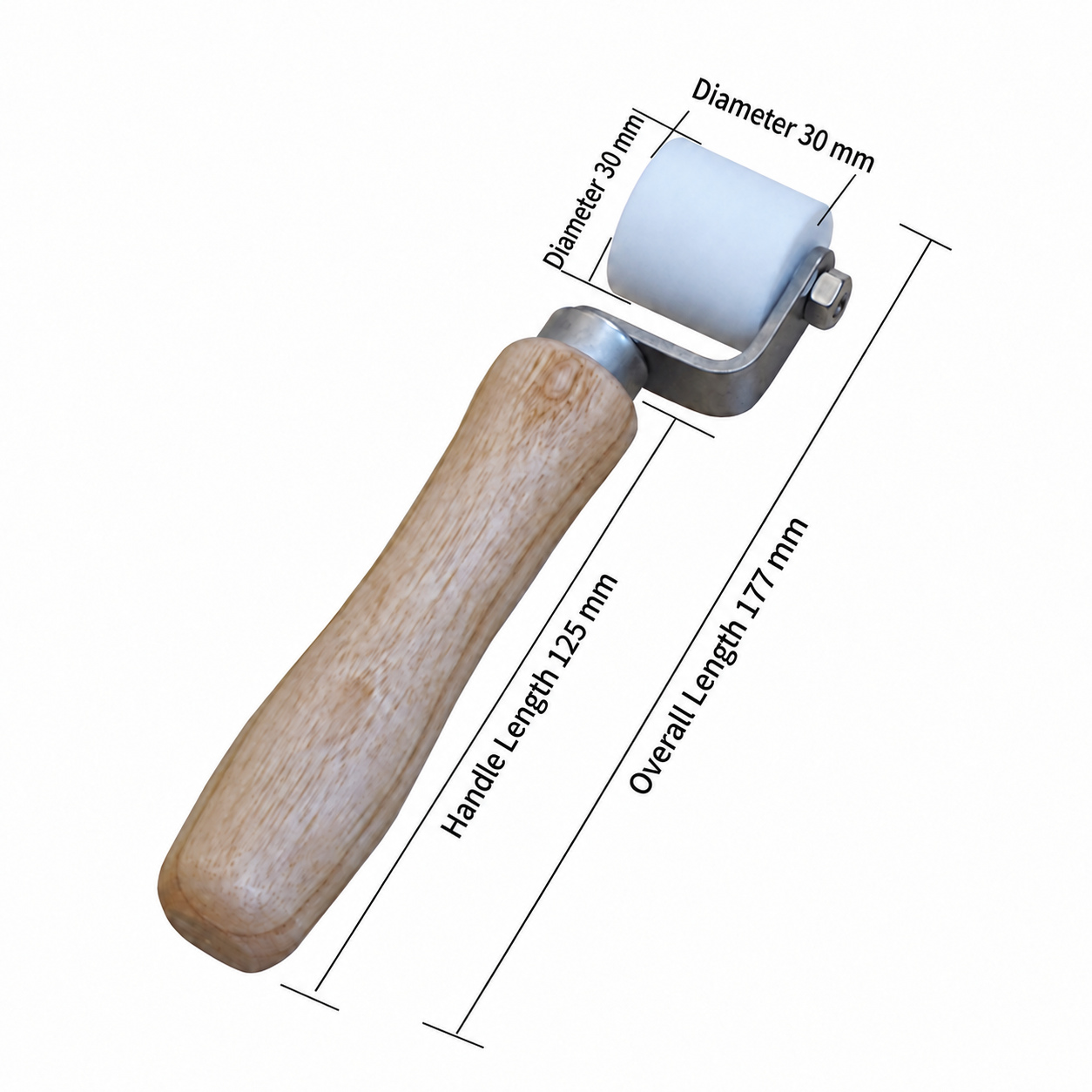
| PTFE | An alternative contact material with white-wheel configurations. | The 30/40mm names identify the listed configurations; confirm required wheel dimensions and temperature grade before ordering. |
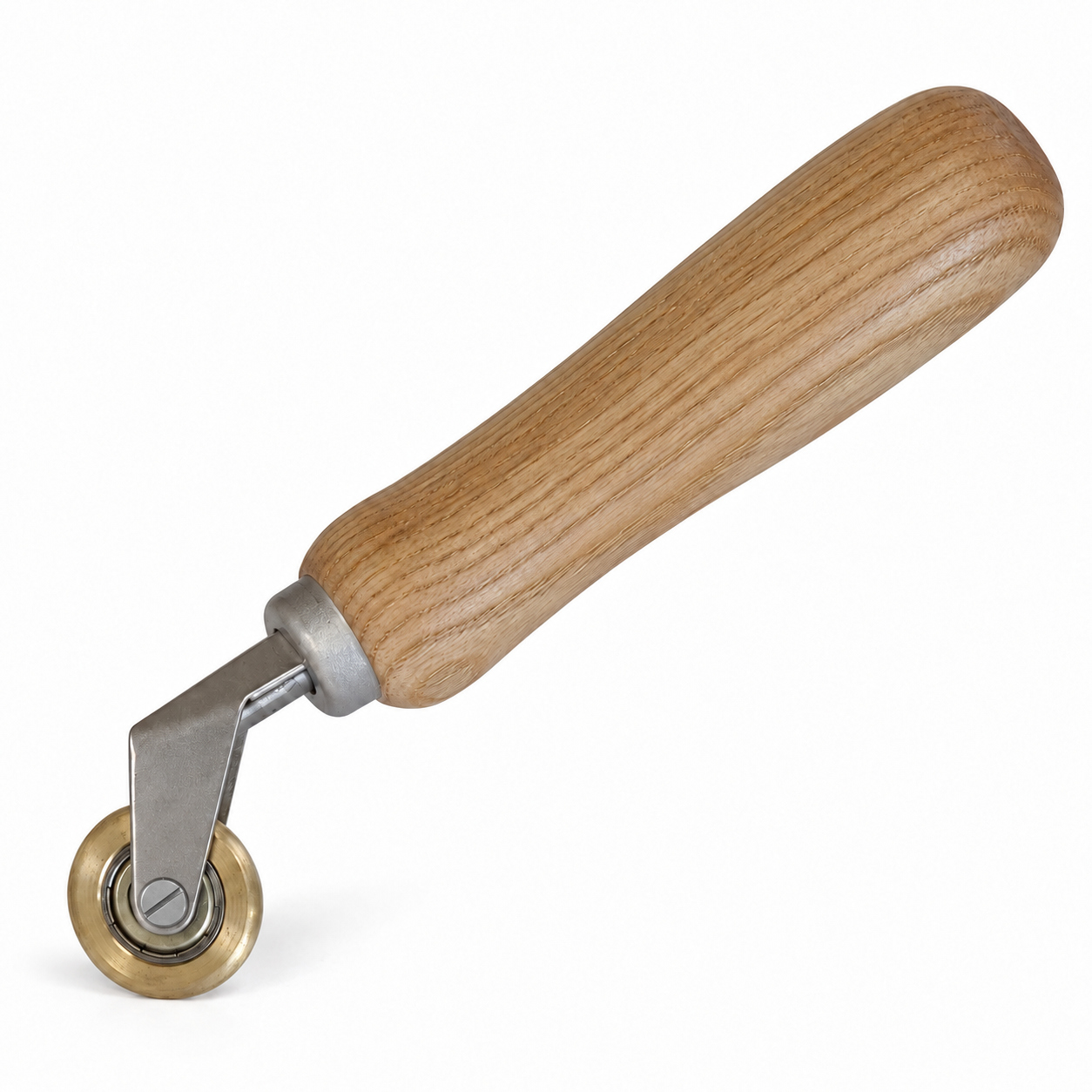
| Copper detail wheel | A recorded 6mm narrow contact band for accessible details. | Check that metal contact is permitted and that the wheel edge will not leave unacceptable marks. |
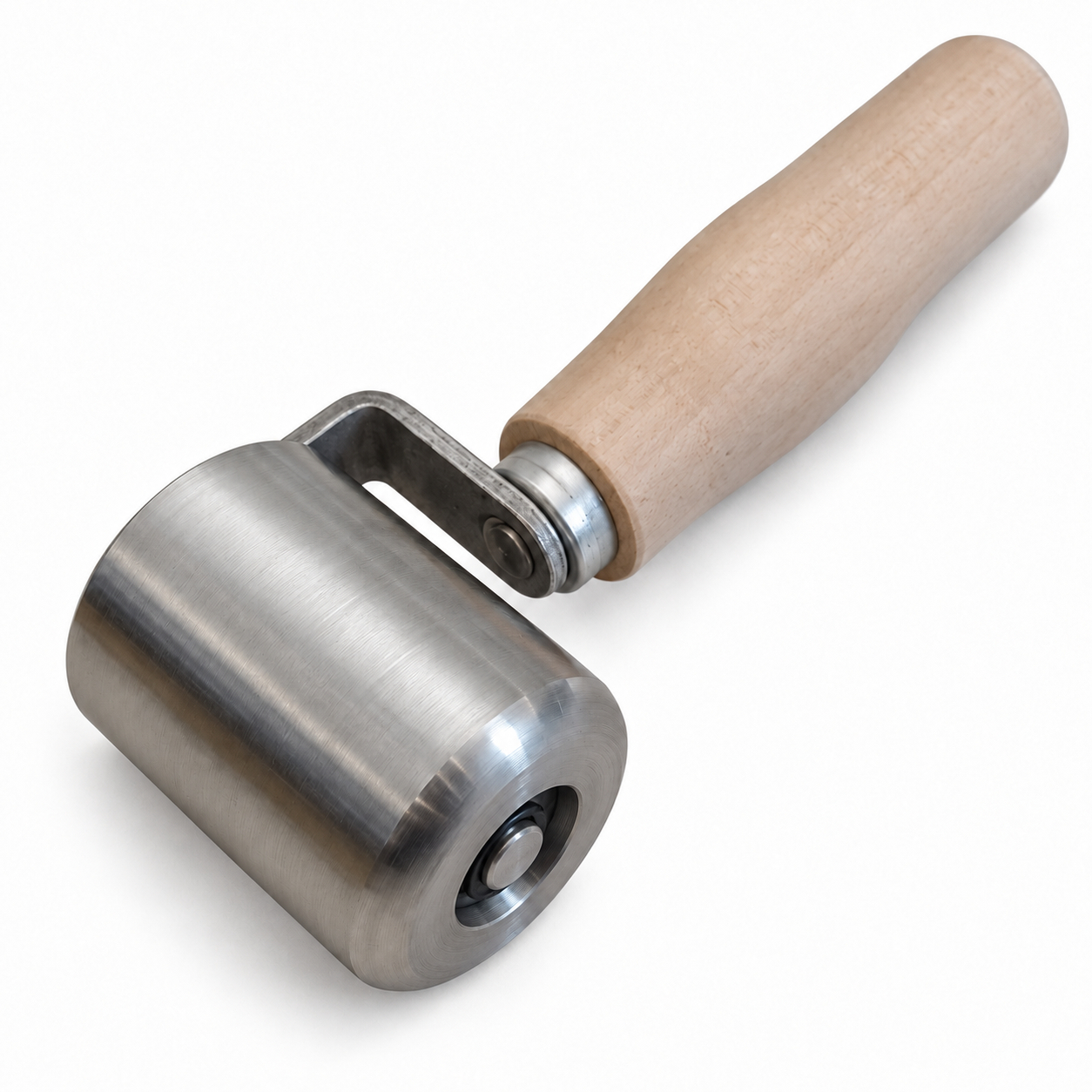
| Acier inoxydable | A recorded 65mm metal contact face for suitable localized applications. | Check metal-surface compatibility, handling weight and finish marks on a sample. |
Silicone
Why consider it:
Width options for localized flat-surface and detail contact.
Selection check:
Confirm compatibility with the material, working conditions and surface-finish requirements.
PTFE
Why consider it:
An alternative contact material with white-wheel configurations.
Selection check:
The 30/40mm names identify the listed configurations; confirm required wheel dimensions and temperature grade before ordering.
Copper detail wheel
Why consider it:
A recorded 6mm narrow contact band for accessible details.
Selection check:
Check that metal contact is permitted and that the wheel edge will not leave unacceptable marks.
Acier inoxydable
Why consider it:
A recorded 65mm metal contact face for suitable localized applications.
Selection check:
Check metal-surface compatibility, handling weight and finish marks on a sample.
Wood-handle, black plastic-handle and dust-cover configurations are identified separately in the product selector. Match the complete configuration, rather than choosing by color or handle alone.
Silicone Single-Wheel Size Comparison
| Wheel face | Overall tool length | Practical difference | Colors |
|---|---|---|---|
| 28mm | 177mm | Narrower contact path; assess edge and detail access. | Red / Green |
| 40mm | 177mm | Intermediate width for near-seam and localized flat-surface contact. | Red / Green |
| 45mm | 177mm | An additional 5mm of contact width compared with 40mm; choose it when that width is useful. | Red / Green |
| 80mm | 185mm | Wider continuous contact band; allow more clearance for positioning and turning. | Red / Green |
28mm
Overall tool length:
177mm
Practical difference:
Narrower contact path; assess edge and detail access.
Colors:
Red / Green
40mm
Overall tool length:
177mm
Practical difference:
Intermediate width for near-seam and localized flat-surface contact.
Colors:
Red / Green
45mm
Overall tool length:
177mm
Practical difference:
An additional 5mm of contact width compared with 40mm; choose it when that width is useful.
Colors:
Red / Green
80mm
Overall tool length:
185mm
Practical difference:
Wider continuous contact band; allow more clearance for positioning and turning.
Colors:
Red / Green
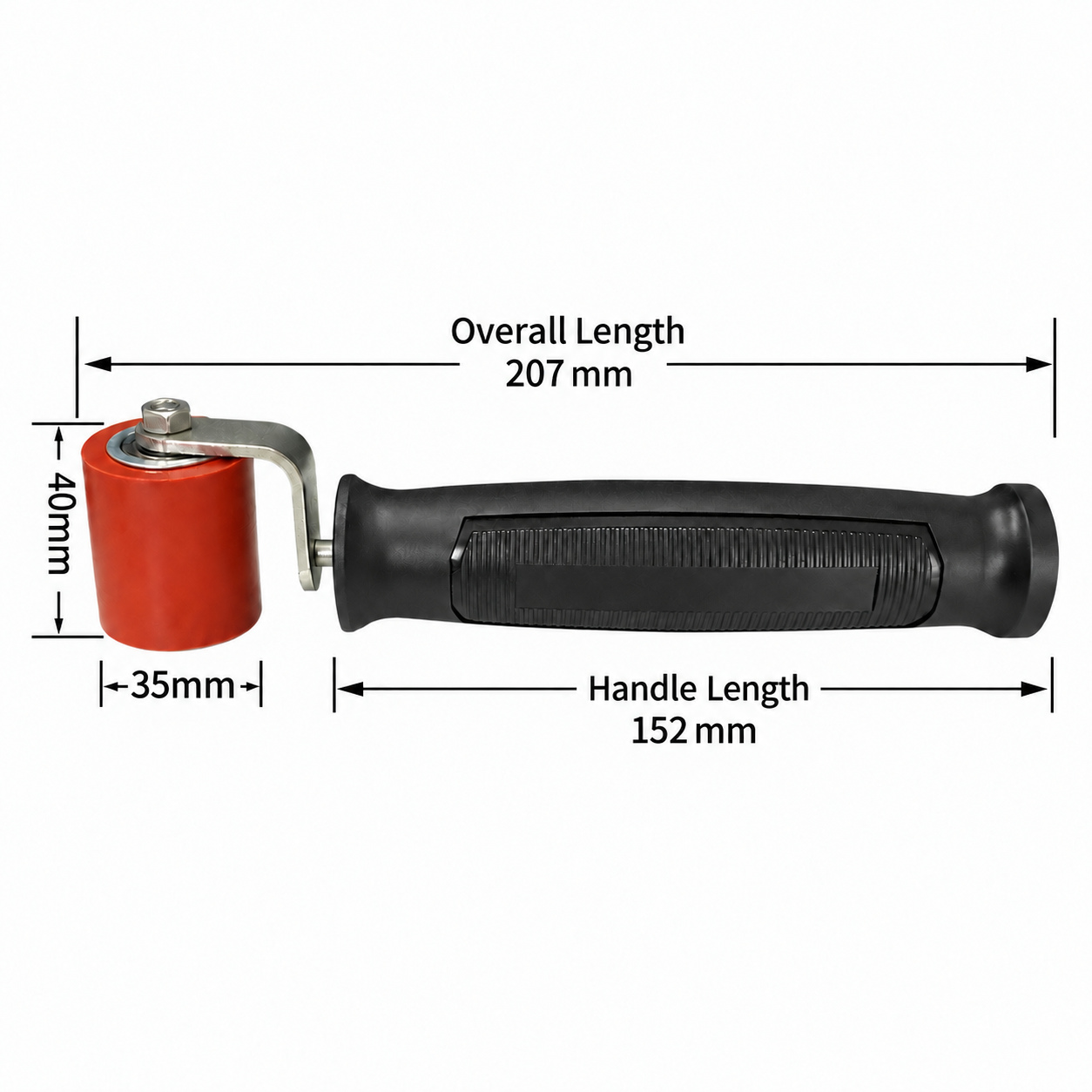
These wood-handle silicone single-wheel versions record a 35mm wheel diameter and 130mm handle length. Contact width does not establish a fixed pressure, an accepted weld width or a guaranteed efficiency increase.
Before and During Localized Rolling
| Step | Site action |
|---|---|
| 1. Match the tool | Check wheel material, width, access and the installation system’s requirements. Trial the intended configuration on representative offcuts. |
| 2. Check contact | Check free rotation, wheel surface and bracket clearance. Keep the intended contact path supported. |
| 3. Inspect the result | Apply controlled hand pressure and inspect contact tracking and surface marks. Use the material system’s acceptance method for the completed work. |
1. Match the tool:
Check wheel material, width, access and the installation system’s requirements. Trial the intended configuration on representative offcuts.
2. Check contact:
Check free rotation, wheel surface and bracket clearance. Keep the intended contact path supported.
3. Inspect the result:
Apply controlled hand pressure and inspect contact tracking and surface marks. Use the material system’s acceptance method for the completed work.
A handheld roller is a localized tool. Use the full-area rolling equipment required by the flooring installation specification where applicable.
Logo Placement on the Handle
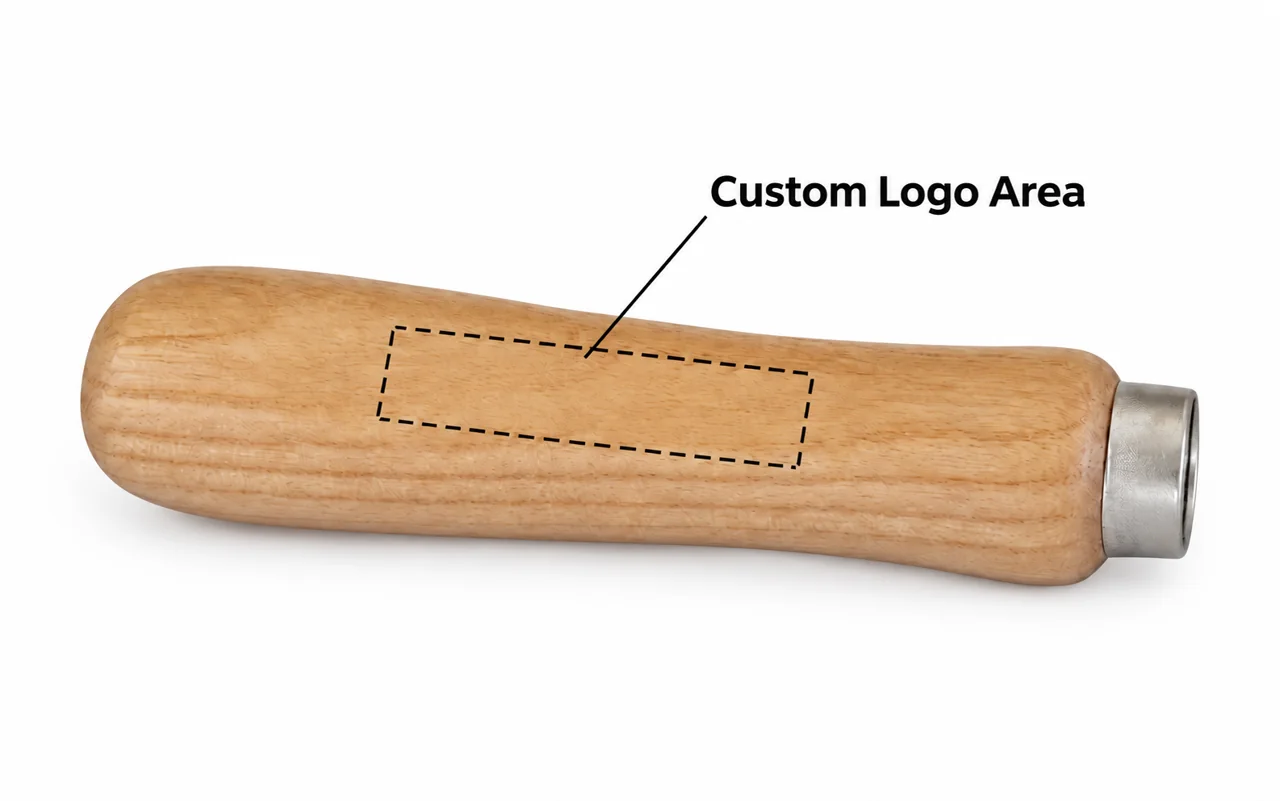
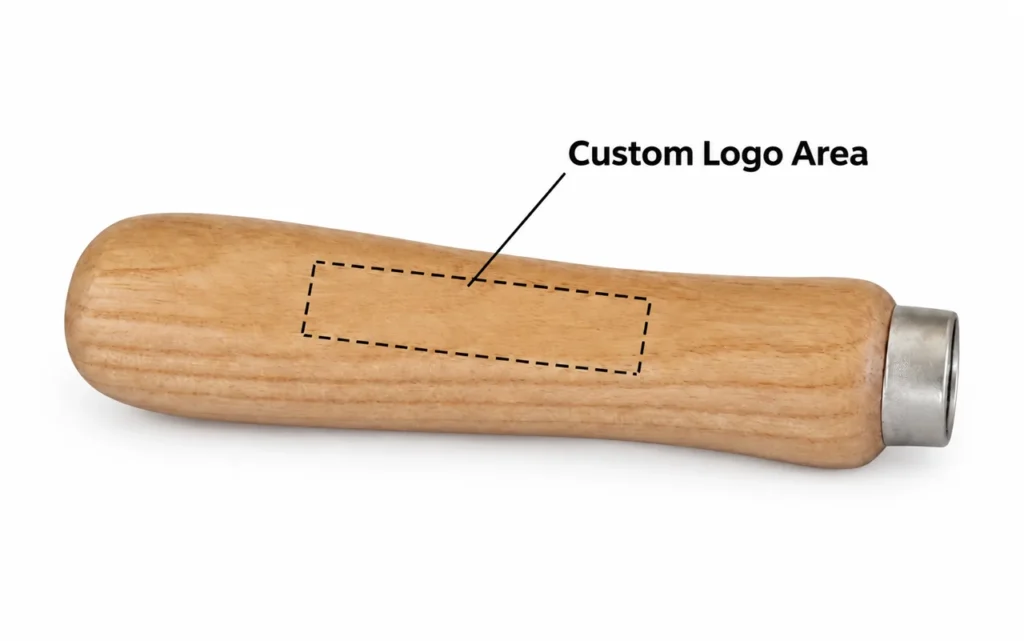
The marked area shows the proposed logo position on the illustrated wooden handle. Send your artwork and required roller configuration with your enquiry so the placement can be reviewed.
For a different handle construction, confirm the proposed position on that configuration before production.
Questions fréquemment posées
How should I choose between 28, 40, 45 and 80mm silicone wheels?
Choose around the contact band and the available space. The 28mm version gives a narrower path; 40 and 45mm provide intermediate options; 80mm gives a wider continuous single-wheel face. Check bracket clearance and a sample result for the chosen width.
Does red or green mean a different performance grade?
The source specifications identify these as color options. Color alone does not establish hardness, temperature resistance or a different performance grade. Confirm any required material specification with the exact configuration.
Does a double-ended roller use both wheels at once?
A double-ended design is flipped to switch between ends. A side-by-side twin-wheel design has two contact bands on the same side. These arrangements serve different positioning needs.
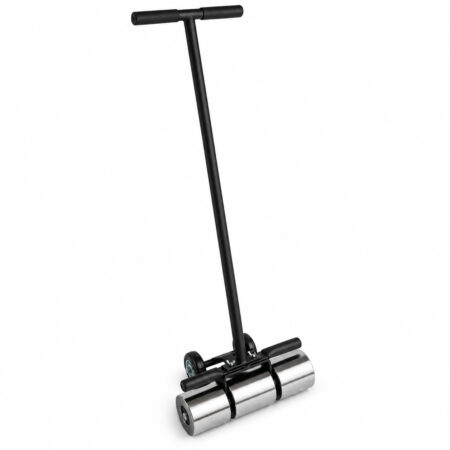
Can a handheld roller replace a heavy floor roller?
Follow the flooring system’s required full-area rolling method and equipment. Handheld rollers provide localized contact at accessible edges and details; they do not by themselves meet a specified whole-floor rolling weight.
Can I order several configurations together?
Include each selected configuration, quantity and any handle-branding requirements in your enquiry. The three quantity-price tiers shown above correspond to the configuration selected at the top of this page.
What should I include when requesting handle branding?
Send the logo artwork, required configuration and proposed handle position. The illustrated position is for the wooden handle shown; other handle types require their own placement confirmation.