Identify the Compound and Its Intended Finish
Confirm the product name and whether it is an underlayment receiving another floor covering or an exposed topping. Record substrate, primer, planned layer thickness and site conditions. A cementitious self leveler is not interchangeable with a resin floor simply because both flow when fresh. Tool selection begins after the material system and required finish are established. Check what the material guide requires at joints, edges and changes of level before planning the pour.
Plan Mixing and Continuous Supply
Self Leveling Mixing Tools in this range are mixing containers. Confirm container capacity, material compatibility, condition, handling and controlled emptying for the intended batch. Select the required mixer and paddle separately using the compound manufacturer's instructions and the mixing equipment's load limits. Measure material and water as specified; do not add water to make a stiff batch easier to spread. Plan container cleaning, batch delivery and enough working capacity to maintain the chosen placement front.
Choose Spreading by the Blade and Access
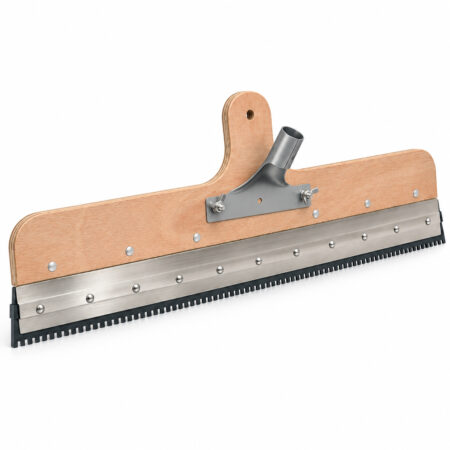
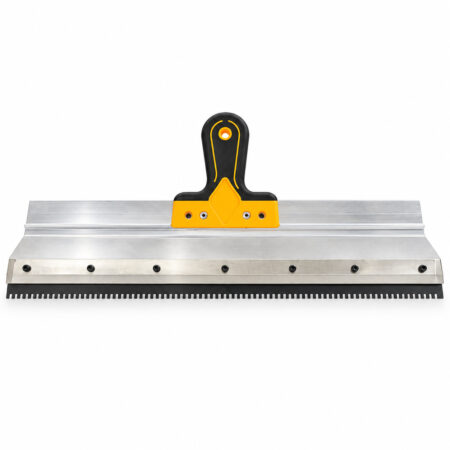
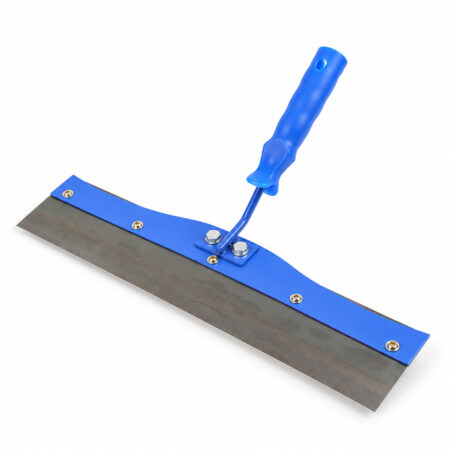
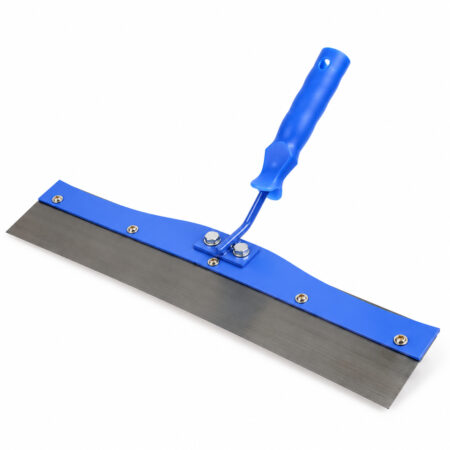
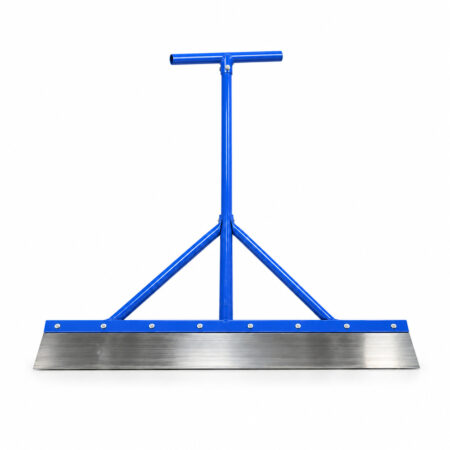
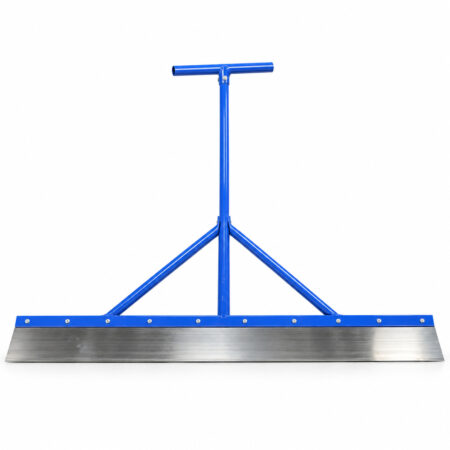
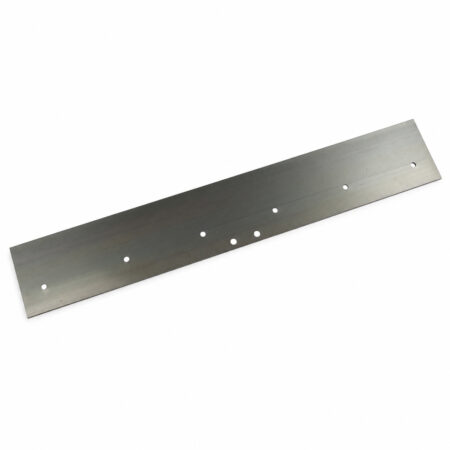
Wood Handle Squeegee and Plastic Handle Squeegee are handle options; neither name establishes an application thickness. Confirm blade geometry, working width and how the blade is retained. The Hand Spreading Tool is a candidate for controlled small areas and edges once its shape is matched to the material's spreading method. Squeegee Blades are replacements or alternative profiles only where they fit the chosen holder. Do not use an unspecified toothed blade as a thickness gauge without confirming the system.
Explore Choose Spreading by the Blade and Access
Treat Spike Rolling as a Material Decision
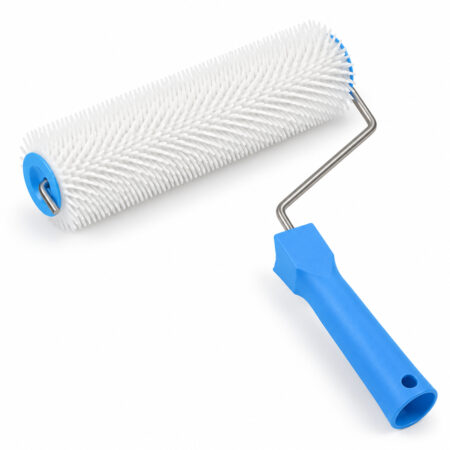
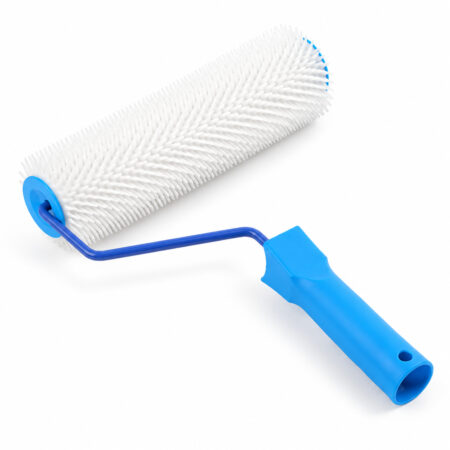
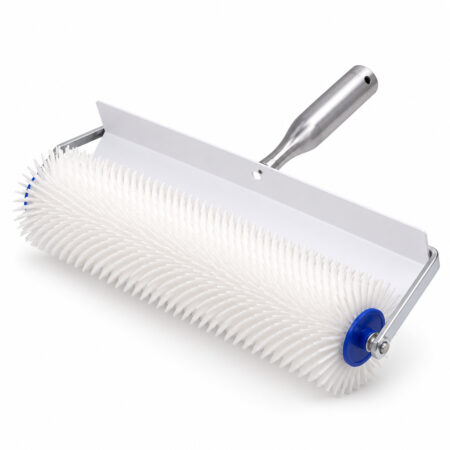
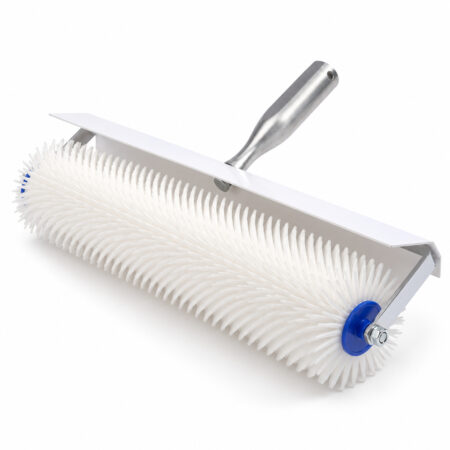
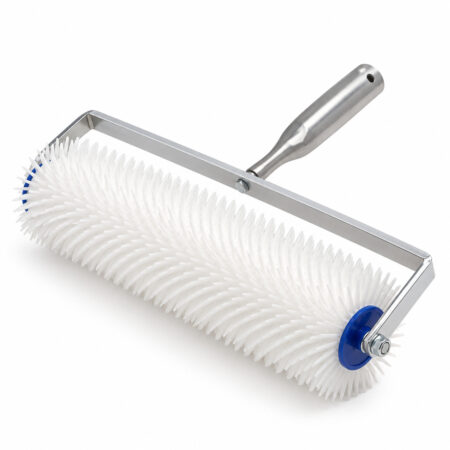
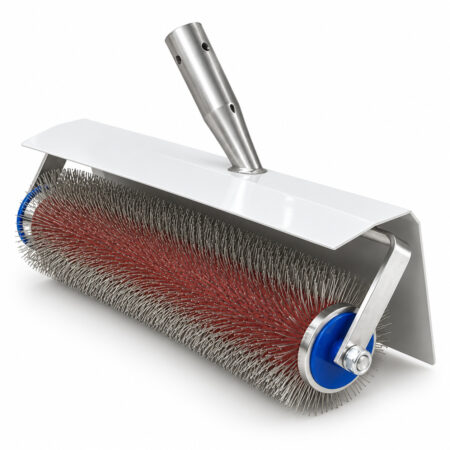
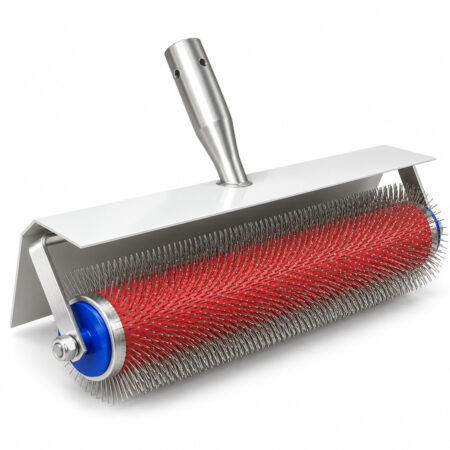
Spiked Rollers can distribute or release air in compounds whose instructions call for that operation. Verify spike form, effective reach through the intended layer, width, frame clearance and handle connection. Sika's underlayment application guide explicitly notes that a spike roller is not mandatory for every self leveling compound. It also explains that late or excessive rolling can leave marks. Choose the permitted operation and timing before selecting a roller; a universal number of passes is not appropriate.
Explore Treat Spike Rolling as a Material Decision
Check Whether Spiked Access Is Allowed
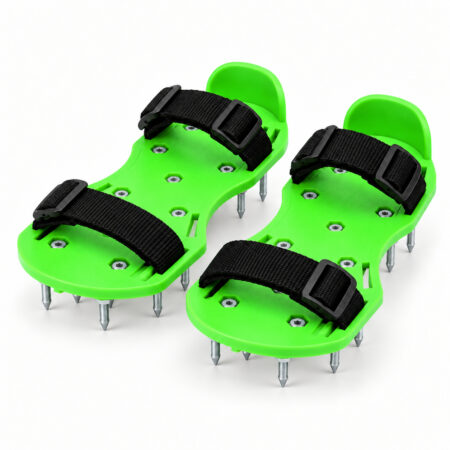
Spiked Shoes are conditional access equipment for a fresh layer when the material method permits entry. Check spike material, fastening, footwear fit and the risk of marking the layer or damaging the underlying primer. ARDEX K 15's instructions specify non-metallic spikes for its application. This is a concrete example of why generic metal spike footwear cannot be called suitable for all self levelers. Plan an exit route and minimise unnecessary travel through the working area.
Use a Sequence with Visible Stop Points
Accept and prime the substrate using the selected system, prepare boundaries and mixing equipment, then mix and place manageable batches. Spread to the required level while maintaining the permitted wet connection between batches. Smooth or spike roll only as specified and while the material remains workable. If ridges persist, batches no longer merge or the surface begins to tear, stop reworking the affected area and consult the compound's procedure. Protect the finished area during its specified drying stage.
Diagnose Foam, Pinholes and Roller Tracks
Foam or aggregate separation calls for reviewing measurement and mixing, not automatically buying a larger roller. Pinholes may involve the substrate, primer or entrained air. Persistent tracks require checking spike suitability, working time and layer thickness. Uneven batch boundaries require checking supply continuity and site conditions. Record which symptom appears before deciding whether the correction concerns tools or the material process. Do not retemper a setting batch or repeatedly roll a surface outside its working window.
Evaluate a Small Bay and Identify the Parts
Use the actual compound and primer in a representative bay. Record material identification, container, separately selected mixing equipment, batch sequence and blade or roller used. Check flatness and finish against the project requirement after the permitted drying stage; inspect for tracks and poorly joined batches. For purchasing, provide required container capacity and handling, blade holder dimensions, roller width and spike requirement, plus shoe construction. List tools and replacements separately; a family name does not confirm compatibility.
Frequently Asked Questions
Get Your Quote Now
- Contact us for your personalized quotation.
- Save more with our direct pricing!
- Competitive wholesale prices.
- No middleman, better deals.