
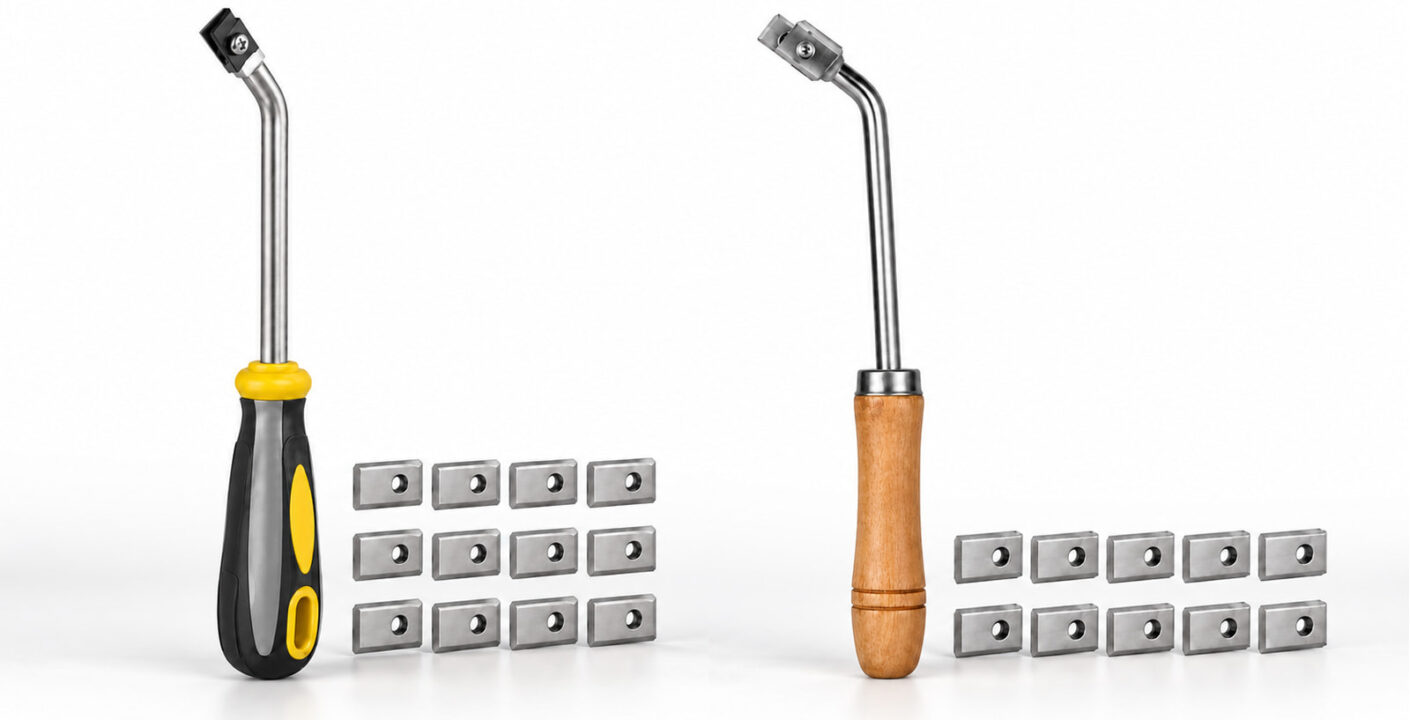
A plastic handle can look like the lighter option in a tool catalogue. A wooden handle can suggest a different grip or finish. Neither impression is a substitute for the specification of the complete floor groover. For dealers comparing two otherwise similar manual tools, the useful starting point is the information that is actually recorded for each model.
For a plastic vs wood handle floor groover comparison, ARIK’s two 220 mm straight-handle versions share the listed overall length, net weight, handle diameter and blade outline. The selection therefore needs to examine the actual handle surface, connection, working grip and permitted care method. Handle material alone does not establish a weight or durability advantage.
The checklist below helps a professional tool dealer compare samples, answer customer questions and describe the selected version accurately. It concerns the two straight-handle models, with their blade shanks and end cutting heads.
Start With the Specifications Both Versions Share
The current plastic-handle floor groover, SKU KCQSLB220MMXXXXX, lists a black-and-yellow plastic grip. The corresponding wooden-handle floor groover, SKU KCQMB220MMXXXXXX, uses a wooden grip. Their shared recorded figures are:
- Overall tool length: 220 mm.
- Net tool weight: 0.6 kg.
- Handle diameter: 27 mm.
- Blade outline: 19 × 12 mm.
Keep the meaning of each figure attached to it. The length describes the tool, the diameter describes the handle and the blade dimensions describe an external outline. They do not form a single description of the groove that the tool will cut.
Both products use the straight-handle layout. A comparison with a wheel-supported groover introduces a separate structural question. Within this pair, the useful material comparison starts after the dealer confirms the correct straight-handle models and their supplied configurations.
Use separate SKUs and photographs even where specifications match. A customer who prefers one handle material should receive the selected version, and a replacement order should remain linked to the right tool and blade record.
Read the 0.6 kg Weight as a Listed Figure
The current records do not support describing the plastic version as lighter than the wooden one. Both list 0.6 kg for the complete tool. A claim about a lighter handle material would not, by itself, establish a lower weight for the assembled product.
If weight matters to a customer, weigh the supplied samples under the same conditions. Record whether the figure includes the fitted blade, loose spares, protective packaging or other items. Compare bare tools with bare tools, and packaged units with equivalent packaged units.
A sample measurement and a listed specification serve different purposes. Keep both in the record, with their measurement scope. If a measured sample appears inconsistent with the listing, confirm the version and configuration before revising the product description.
Do not turn a small observed difference into a general material claim without an agreed measurement method and supporting evidence. Likewise, equal listed net weights do not demonstrate identical balance, grip control or effort during use. Those observations need their own comparison.
Compare the Actual Grip With the User’s Normal Gloves
Inspect Surface and Shape
Examine the plastic handle’s surface, moulded edges and visible condition. Check the wooden handle’s finish and surface condition. Record what is present on the samples rather than relying on a material name to describe texture or grip.
The shared 27 mm handle-diameter record does not describe every contour of the grip. Have the intended user hold each complete tool in the working posture. Include the gloves normally used for the job, since a bare-hand preference may not represent the actual working arrangement.
Observe whether the user can maintain the intended hand position and whether the surface allows controlled guidance. Use direct descriptions, such as an observed grip change or a contact point. A sample preference is useful purchasing information, but it does not establish a certified slip-resistance rating or a universal comfort advantage.
Check the Connection Separately
Inspect the connection between the grip and the rest of the tool using the supplied instructions. Record any movement, visible looseness or defect that requires clarification. Keep this check separate from the user’s opinion of the surface.
A preferred texture does not compensate for an unresolved connection issue. Conversely, a secure connection does not demonstrate long-term durability under every cleaning method or work condition. Confirm the relevant requirements with the supplier for the exact version being ordered.
Where a proposed handle finish or component changes, review the affected sample checks again. A previous approval for the model name should not automatically cover a different surface, grip connection or supplied configuration.
Ask for a Specific Cleaning Method
Cleaning is a practical selection issue for tools used around flooring materials. It is also an area where broad material claims are unhelpful. A plastic designation does not identify the exact resin, and a wooden designation does not identify the species, coating or treatment.
Provide the supplier with the cleaning method the customer expects to use. Ask for the permitted cleaning products and relevant conditions for the actual handle and its surface treatment. Obtain the supplied care instructions before assessing compatibility.
Do not independently try an unknown solvent on the sample to discover whether it survives. Use the confirmed method and record the handle’s condition before and after the agreed assessment. Where the intended product or procedure is not covered, resolve the permission with the supplier first.
The sample record can note visible surface changes or connection concerns under that confirmed method. It should also state the conditions and scope of the assessment. A limited cleaning check cannot establish resistance to every solvent, cleaner, concentration or repeated-use condition.
If the dealer cannot obtain the information needed for a customer’s required cleaning procedure, leave that requirement unresolved. Avoid describing either version as chemically resistant, suitable for every wet environment or maintenance-free on the basis of its appearance.
Keep Blade Outline Separate From Groove Capability
Both versions record a 19 × 12 mm blade outline. This is a starting point for identifying the supplied part. It does not mean that the tools cut a 12 mm groove or that either has a confirmed groove-depth range derived from those dimensions.
The working result depends on the cutting-edge geometry, how the blade is retained and presented, and the flooring and joint requirements. Establish the required preparation for the exact floor before judging whether the supplied blade can produce it.
Matching external dimensions also do not prove interchangeability. Confirm the blade thickness, fixing features, seating and cutting profile for each tool. A hole or clamp arrangement that looks familiar is insufficient evidence for a replacement order.
Use the groover blade compatibility checklist to keep the tool model, part identity, mounting information and accepted groove result together. Follow the supplied procedure when examining or replacing a blade, and protect the cutting edge during handling.
The comparison image shows loose blades with the tools. Their displayed number is not an agreed standard supply quantity. Confirm fitted and spare-blade quantities in the contents list for each model, along with the replacement-part reference.
Use Matched Conditions for a Fair Sample Comparison
A dealer can gather useful evidence without turning the exercise into a claim that one material is universally better. Define the question before starting: whether the intended user prefers the grip, whether the care method is permitted, or whether the complete tool meets the required seam-preparation task.
1. Label the Samples and Confirm Their Configuration
Give each sample its full SKU and a reference photograph. List the parts received, identify the fitted blade and record the handle condition. Keep any sample-only extras separate from the proposed production contents.
Confirm that the samples represent the versions being compared. If a blade, handle or mounting differs from the proposed order, resolve the discrepancy before treating the result as approval of that order.
2. Establish the Flooring and Inspection Criteria
Use representative flooring offcuts and the required joint detail. Follow the flooring system’s instructions to establish whether grooving is needed and which profile is required. Keep the same material and acceptance criteria for both tools.
Confirm equivalent blade identity, condition and approved setup before making comparisons about handle choice. Where equivalence has not been established, record the difference. Do not swap blades between the tools merely to make the samples appear matched.
3. Keep User and Working Posture Consistent
Have the intended user compare the two tools with the same usual gloves and working posture. Check grip and connection before making a trial groove. Record the intended direction of movement and the space needed for the hand, shank and head.
If the task involves a local seam end or transition, reproduce the relevant obstruction in the mockup. Neither handle material guarantees access to every corner. A successful grip comparison in open space does not establish that the complete tool fits the required position.
4. Inspect the Groove Independently
Check the trial groove against the flooring system’s requirements, including the start and finish of the local run. Inspect the adjacent edges and backing condition as appropriate to the specified process. Record the result for each tool and setup.
Separate a grip observation from a cutting result. If the operator reports a preferred feel but the groove is unsuitable, investigate the cutting arrangement and method. If both grooves meet the criteria, the grip preference can inform the choice without being presented as a precision or durability ranking.
5. Record the Approved Care Assessment
Evaluate care using only the confirmed cleaning method. Keep the before-and-after observations with the sample identity and instructions used. If the cleaning requirement differs between customers, assess it for the relevant order rather than issuing a blanket statement for the handle material.
Keep photographs and short factual notes with the sample record. This lets a colleague see which conditions were checked and which questions still need an answer. It also gives the supplier a clear basis for addressing any concern.
Build a Comparison Record the Sales Team Can Reuse
Organize the result around four groups of information. Each group answers a different customer question, so a positive observation in one should not be used to fill a gap in another.
- Product identity and measurements: full SKU, structure, handle material, listed figures and sample measurement scope.
- Grip and connection: user, gloves, posture, observed surface condition and connection checks.
- Cutting arrangement: blade reference, mounting, flooring detail and inspected trial-groove result.
- Care and delivery: permitted cleaning method, supplied instructions, spare-blade quantity and packing contents.
Keep an observation distinguishable from a confirmed specification. “The user preferred this sample with the stated gloves” is a different claim from “this material is more comfortable.” The first describes a particular assessment; the second would require broader support.
A useful record also identifies the unresolved points. For example, the listed dimensions may match while the permitted cleaner remains unconfirmed. Give the sales team enough information to answer the confirmed part of the question and route the remaining requirement for clarification.
If a customer asks whether plastic lasts longer than wood, explain which information is available for the specific supplied versions. Do not infer service life from colour, price, surface feel or one short trial. Request relevant evidence where a durability requirement is part of the purchase.
Decide Whether to Stock One Handle or Both
Stock the version whose grip, care instructions and accepted trial results match the intended customers’ requirements. Where customers have different confirmed preferences, both versions may be useful, with separate item numbers and accurate descriptions.
A two-handle offer should explain the actual choice. It should not imply that the plastic tool is a lighter grade or the wooden tool is a higher-performance grade when the recorded specifications do not establish those differences.
Within a wider range of manual and electric floor groovers, describe structure and intended task before handle material. A different support arrangement or powered tool introduces additional selection requirements that a change of grip material cannot resolve.
For replenishment, retain the accepted sample reference and confirm that the supplied version has not changed. If a different handle surface, blade or connection is proposed, review the affected requirements before treating the previous sample decision as current.
Use Clear Catalogue Wording and Order Lines
A catalogue can present the shared figures plainly and identify the handle difference directly. Use the full model reference and a photograph of the actual selected version. Keep claims about weight, grip, chemical resistance and service life tied to the evidence available for that version.
For an order, confirm the complete tool SKU, fitted blade, separately supplied blade quantity, individual protection and packing contents. Keep the net tool weight separate from packaged gross weight. Agree the commercial terms in the quotation for the actual quantity and destination.
Make sure the product page, quotation and contents label describe the same configuration. If two items share dimensions, their distinct model identifiers become especially useful for preventing a handle substitution or a replacement-part mix-up.
Before placing the order, ask the team to confirm these points:
- Are both comparison samples the intended 220 mm straight-handle models?
- Do the listed measurements and sample weighing conditions support the description?
- Has the user assessed grip and connection with the usual gloves and posture?
- Are the cleaning method and blade pairing confirmed for the selected version?
- Does the agreed contents list identify the fitted and spare parts separately?
Choose the handle using those answers and the accepted sample result. To compare the two versions with ARIK, provide the intended flooring and seam position, normal gloves, required cleaning procedure and proposed supply configuration. That information supports a specific selection without relying on material assumptions.
