
Description
Push-knife trimming of flexible flooring
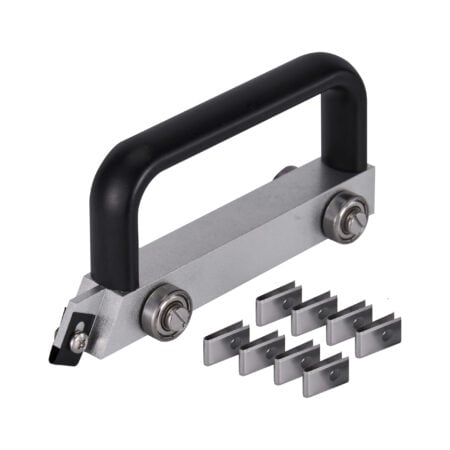
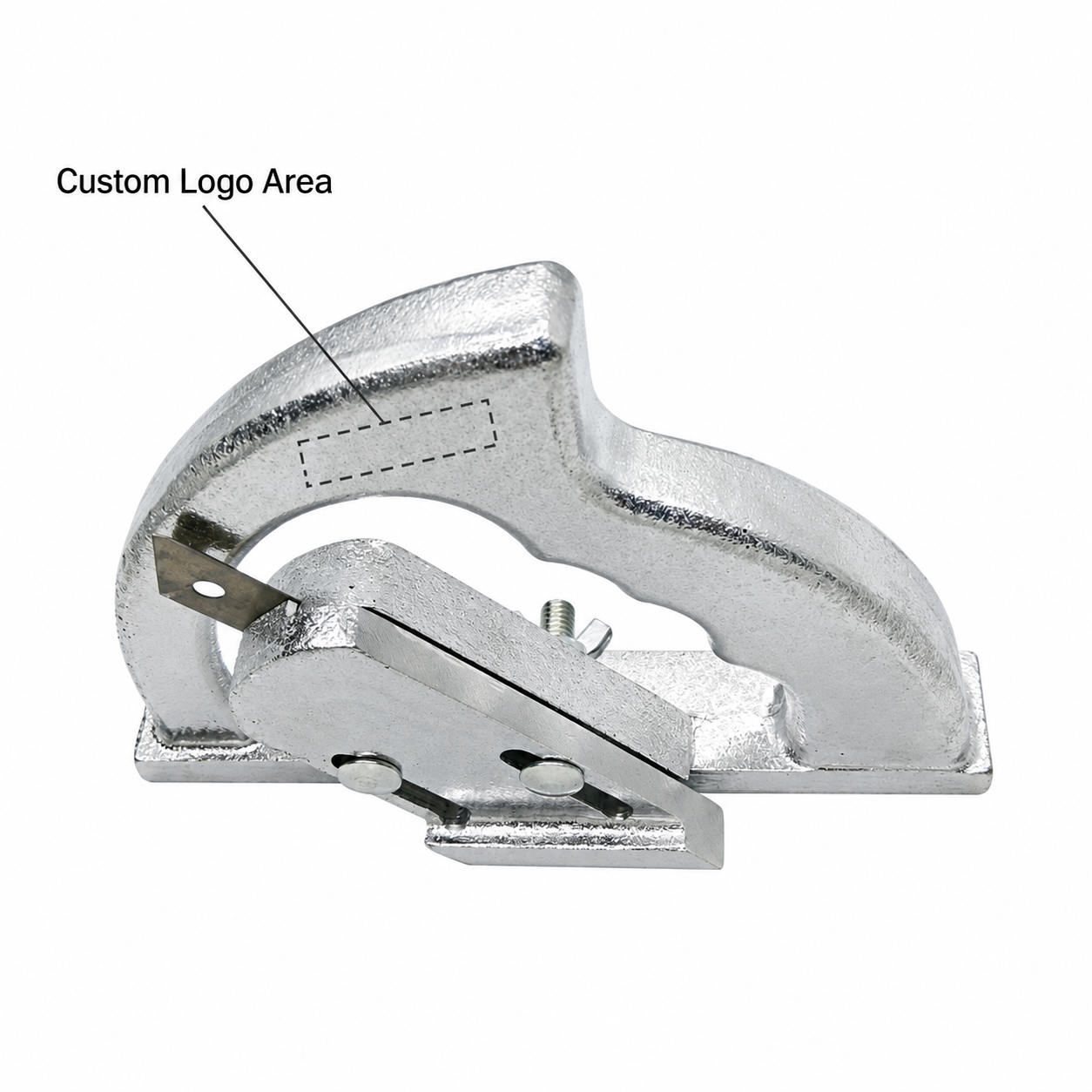
Compare the large and small push-knife layouts by the actual cutting position, guiding contact and space around the tool. Validate the blade setup and material on an offcut before use.
| What matters on site | Practical value |
|---|---|
| Choose the footprint | The recorded dimensions and mass change access and handling. |
| Confirm the blade setup | Check the fitted blade and projection for the intended material and cut. |
| Assess the visible edge | A test cut shows how the tool tracks and how the finished edge meets the project requirement. |
Choose the footprint
The recorded dimensions and mass change access and handling.
Confirm the blade setup
Check the fitted blade and projection for the intended material and cut.
Assess the visible edge
A test cut shows how the tool tracks and how the finished edge meets the project requirement.
Key specifications and configuration
| Item | Specification |
|---|---|
| Listed overall dimensions (l × w × h, mm) | 195 × 50 × 140 |
| Net weight (kg) | 0.8 |
Listed overall dimensions (l × w × h, mm):
195 × 50 × 140
Net weight (kg):
0.8
Compare the options
Large vs. Small Nora-Style Push Knives
| Configuration | Dimensions and construction |
|---|---|
| NLTDD Large | Recorded Complete-Tool Dimensions: 195×50×140mm Recorded Net Weight: 0.8kg Materials and Blades: Confirm blade shape, cutting depth, and material sample cuts separately; do not extend compatibility because it is the large version. |
| NLTDX Small | Recorded Complete-Tool Dimensions: 160×55×80mm Recorded Net Weight: 0.5kg, 0.3kg lighter than the large version Materials and Blades: Check blades against the small version's mounting structure; do not assume interchangeability with the large version. |
| Configuration | Application and value | Selection checks |
|---|---|---|
| NLTDD Large | Locally recorded length and height are greater; the 50mm width field is 5mm smaller than the small version. Assessment for continuous sheet trimming, long-line sample cutting, and a tool with a larger grip area. Offers a larger body option for comparing grip and guiding during continuous knife travel. | Adds 0.3kg and requires more length and height clearance; no evidence establishes greater cutting thickness or accuracy. Compare tracking deviation, bottom scratches, grip, and pushing force on the same material and cut line. |
| NLTDX Small | Locally recorded length is 35mm shorter and height 60mm lower; width is 55mm, with measurement direction requiring verification. Assessment for short-section trimming, localized seam edges, and tool configurations for more compact working spaces. Offers lower net weight and shorter, lower dimensions for comparing access and carrying requirements. | The smaller body does not automatically establish greater accuracy or guarantee access to every wall corner. Compare with the large version under the same material and guiding conditions instead of assuming greater suitability for detail work. |
NLTDD Large
Dimensions and construction:
Recorded Complete-Tool Dimensions: 195×50×140mm
Recorded Net Weight: 0.8kg
Materials and Blades: Confirm blade shape, cutting depth, and material sample cuts separately; do not extend compatibility because it is the large version.
Application and value:
Locally recorded length and height are greater; the 50mm width field is 5mm smaller than the small version. Assessment for continuous sheet trimming, long-line sample cutting, and a tool with a larger grip area. Offers a larger body option for comparing grip and guiding during continuous knife travel.
Selection checks:
Adds 0.3kg and requires more length and height clearance; no evidence establishes greater cutting thickness or accuracy. Compare tracking deviation, bottom scratches, grip, and pushing force on the same material and cut line.
NLTDX Small
Dimensions and construction:
Recorded Complete-Tool Dimensions: 160×55×80mm
Recorded Net Weight: 0.5kg, 0.3kg lighter than the large version
Materials and Blades: Check blades against the small version's mounting structure; do not assume interchangeability with the large version.
Application and value:
Locally recorded length is 35mm shorter and height 60mm lower; width is 55mm, with measurement direction requiring verification. Assessment for short-section trimming, localized seam edges, and tool configurations for more compact working spaces. Offers lower net weight and shorter, lower dimensions for comparing access and carrying requirements.
Selection checks:
The smaller body does not automatically establish greater accuracy or guarantee access to every wall corner. Compare with the large version under the same material and guiding conditions instead of assuming greater suitability for detail work.
Selection and use
| Step | What to check |
|---|---|
| Confirm the material and cut | Check the required edge and protect underlying layers. |
| Set and inspect | Confirm blade mounting, guide contact and working clearance. |
| Trial the tool | Inspect tracking and the resulting edge on matching material. |
Confirm the material and cut:
Check the required edge and protect underlying layers.
Set and inspect:
Confirm blade mounting, guide contact and working clearance.
Trial the tool:
Inspect tracking and the resulting edge on matching material.
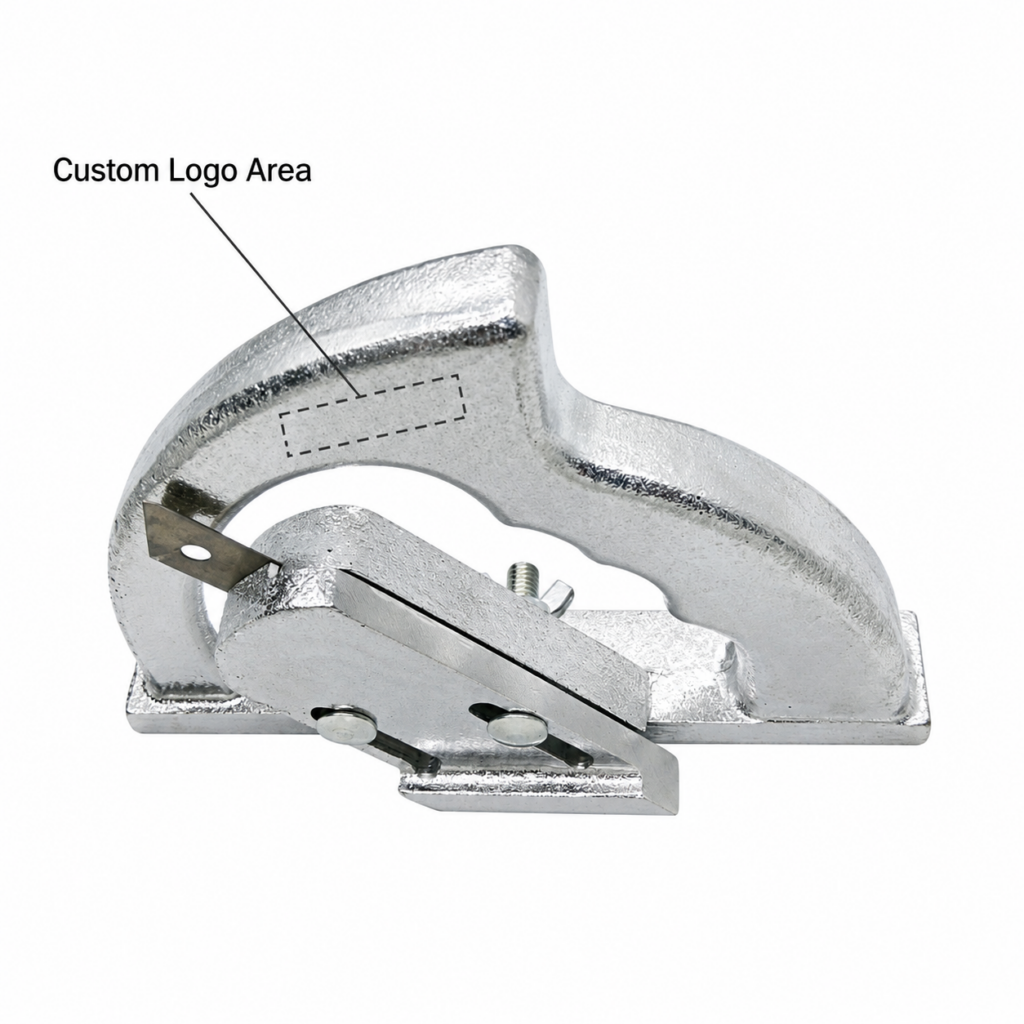
Logo customization
The image shows the identified customization area for this product. Send the artwork and required quantity so the placement, marking method and final proof can be confirmed before production.
Frequently asked questions
Is the Nora Push Knife a nora-Brand Product?
'Nora style' in the current documentation is a tool-style designation. No evidence establishes an original or authorized brand product, so do not make those commitments.
Can the Large Version Cut Thicker Material?
No validated thickness-capacity data is available. A larger body does not mean greater blade or material capability.
Can It Replace a Seam Trimmer?
Check guiding and cut-line requirements. Push knives and dedicated seam tools with seam-adjustment structures have overlapping tasks, but their structures and procedures cannot be treated as identical.